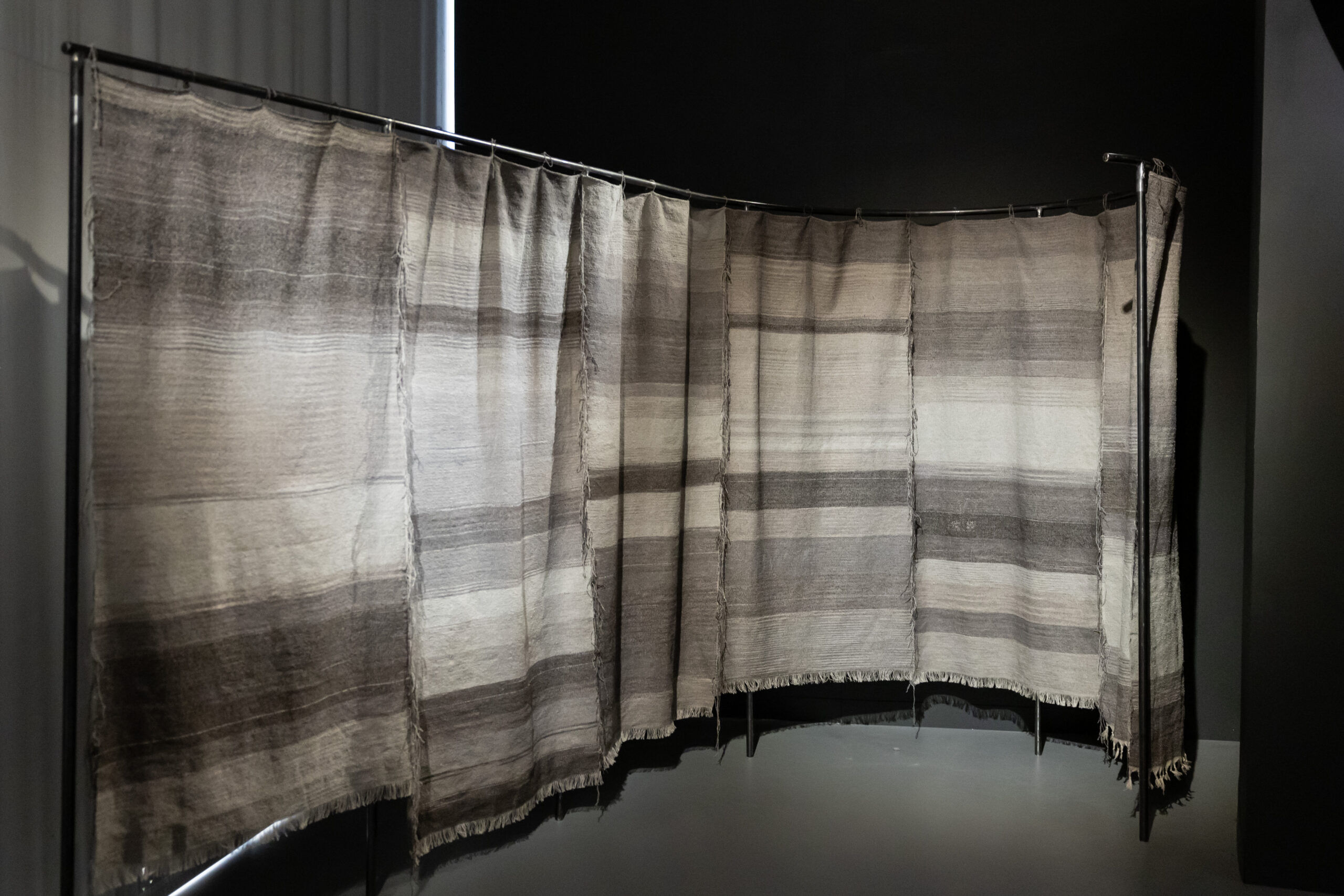
You Are There in That, 2025
Textile (natural linen yarn and linen yarn hand-dyed with black alder cones), embroidery, steel
Textile production: handwoven by Beata Wietrzyńska / In Weave
Created for the exhibition “1945: Not the End, Not the Beginning”, POLIN Museum of the History of Polish Jews, 2025
I
and you just disappear and disappear
you are there in that
vanishing movement
(like a word, perhaps)
II
you are in my
vanishing movement
(among all my dead friends)
Jon Fosse, “Du berre forsvinn og forsvinn”
The clatter of the loom – the steady, unhurried rhythm of hands and feet – guides the yarn through the warp, gradually forming the weft.
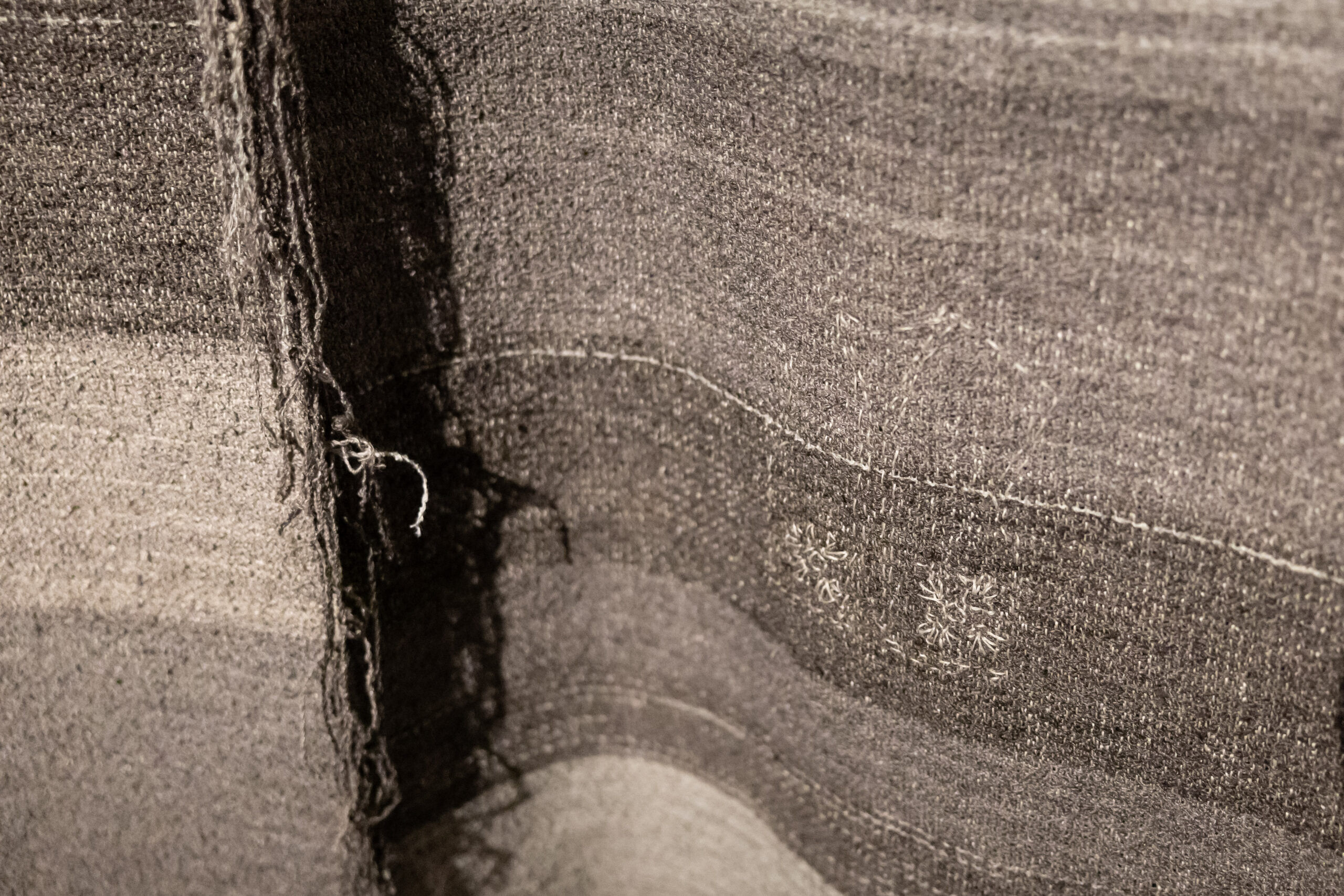
The textile is an intricate structure. Designed by Alicja Bielawska, it was handwoven by master weaver Beata Wietrzyńska using one of the oldest textile-making techniques. Bielawska dyed the linen yarn with black alder cones, a labour-intensive process in which nature and chance produce subtle and unpredictable variations in colour. What initially appears grey gradually reveals, under close observation and in changing light, shades of violet, brown and umber.
This method of dyeing is an act of trust in the elements – a submission to nature and its shifting conditions. Black alder, a tree valued for its medicinal properties and capacity for regeneration, can restore life to depleted soil. Nature thus enters the very fabric of the work, bringing with it a history of endurance and renewal, and the memory of life returning after destruction. The work was created specifically for the exhibition 1945: Not the End, Not the Beginning at the POLIN Museum.
The surface of the textile forms a narrative that might be read through touch. Bouclé yarn creates delicate raised textures, resembling Braille awaiting interpretation. Can a weave carry words? Subtle embroidered drawings emerge across the fabric. Almost imperceptible, they require patience and concentration to be seen. They function as quiet appeals for attentiveness and refer to objects presented in the exhibition – keepsakes and artefacts that preserve traces of the lives of the people whose stories shape its narrative.
In her 1965 book On Weaving, Anni Albers wrote: “Being creative is not so much the desire to do something as the listening to that which wants to be done: the dictation of the materials.” Alicja Bielawska’s textile seems to follow this principle; its meanings are expressed quietly, through the material itself. The work becomes a record in which past and present, the measured movement of the hands, memory and presence are interwoven.
For many years, Bielawska has explored the relationship between material, memory and everyday experience. Her sculptures, installations and drawings are characterised by a subtle interplay of form and meaning. Her practice is rooted in sensitive gestures, traces of touch and an attentiveness to materials that carry histories within them.
In You Are There in That, the artist continues this exploration by examining the tension between transience and endurance, between disappearance and preservation. She allows the material to speak – to become a medium of memory in its own right.
Natalia Andrzejewska
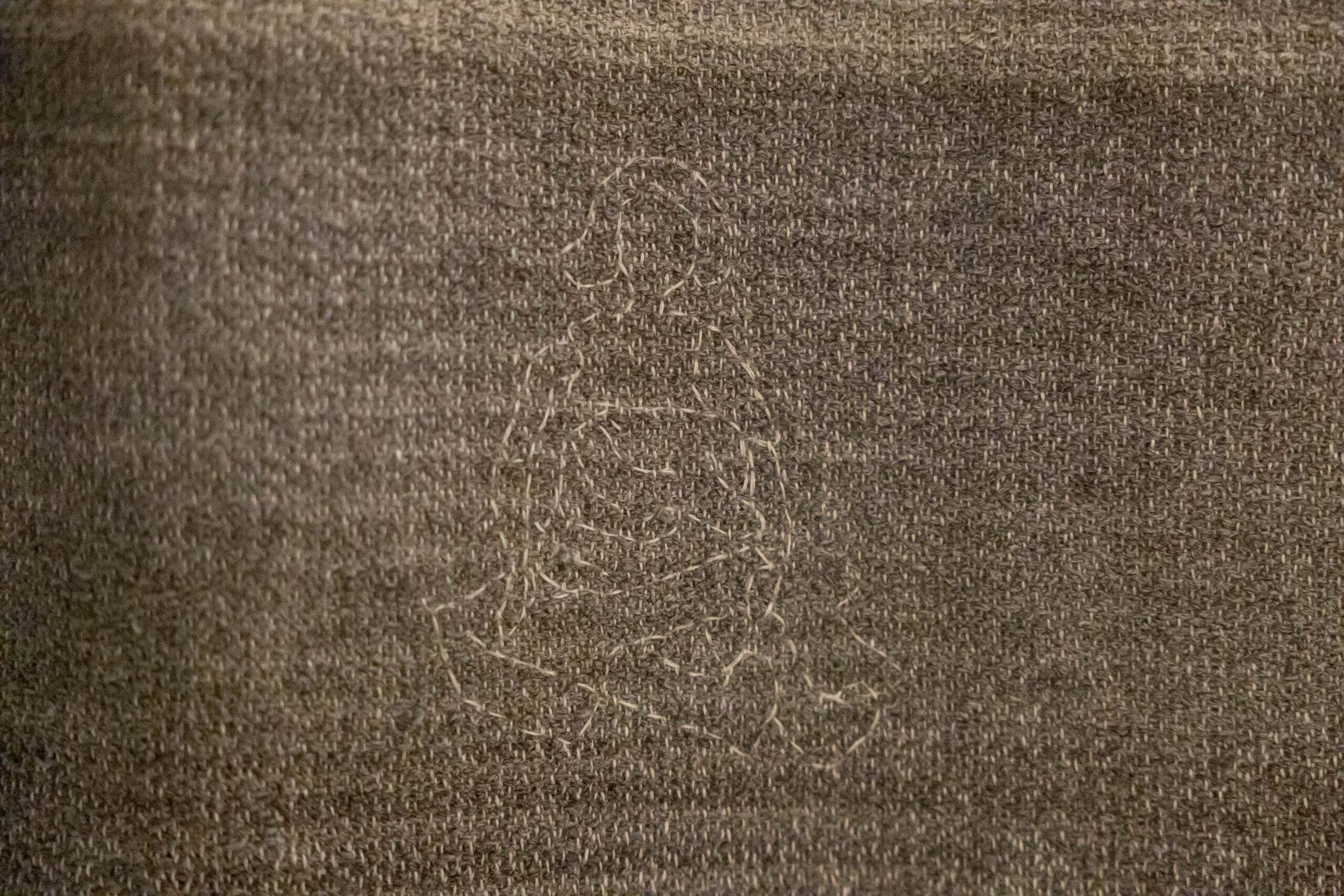
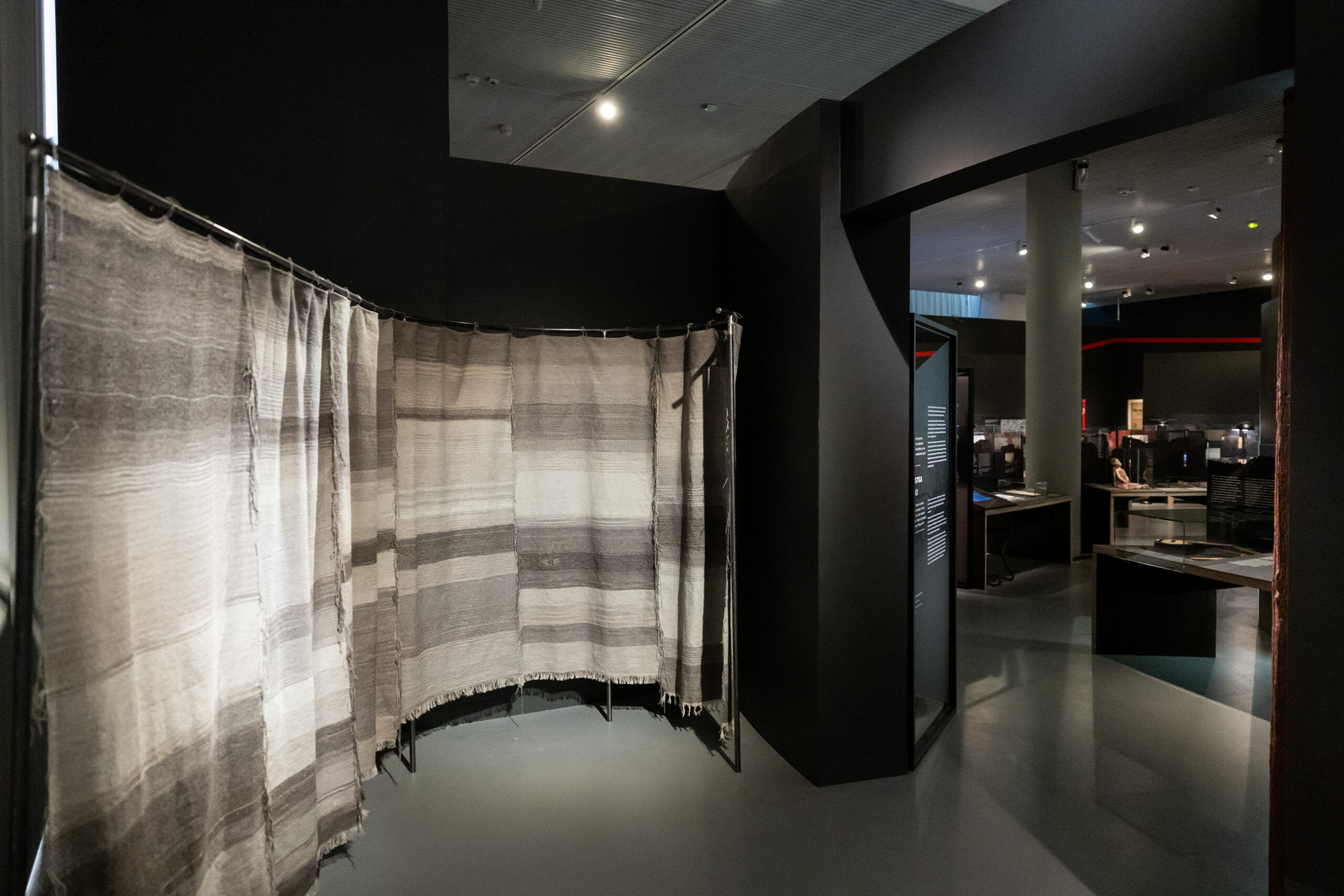
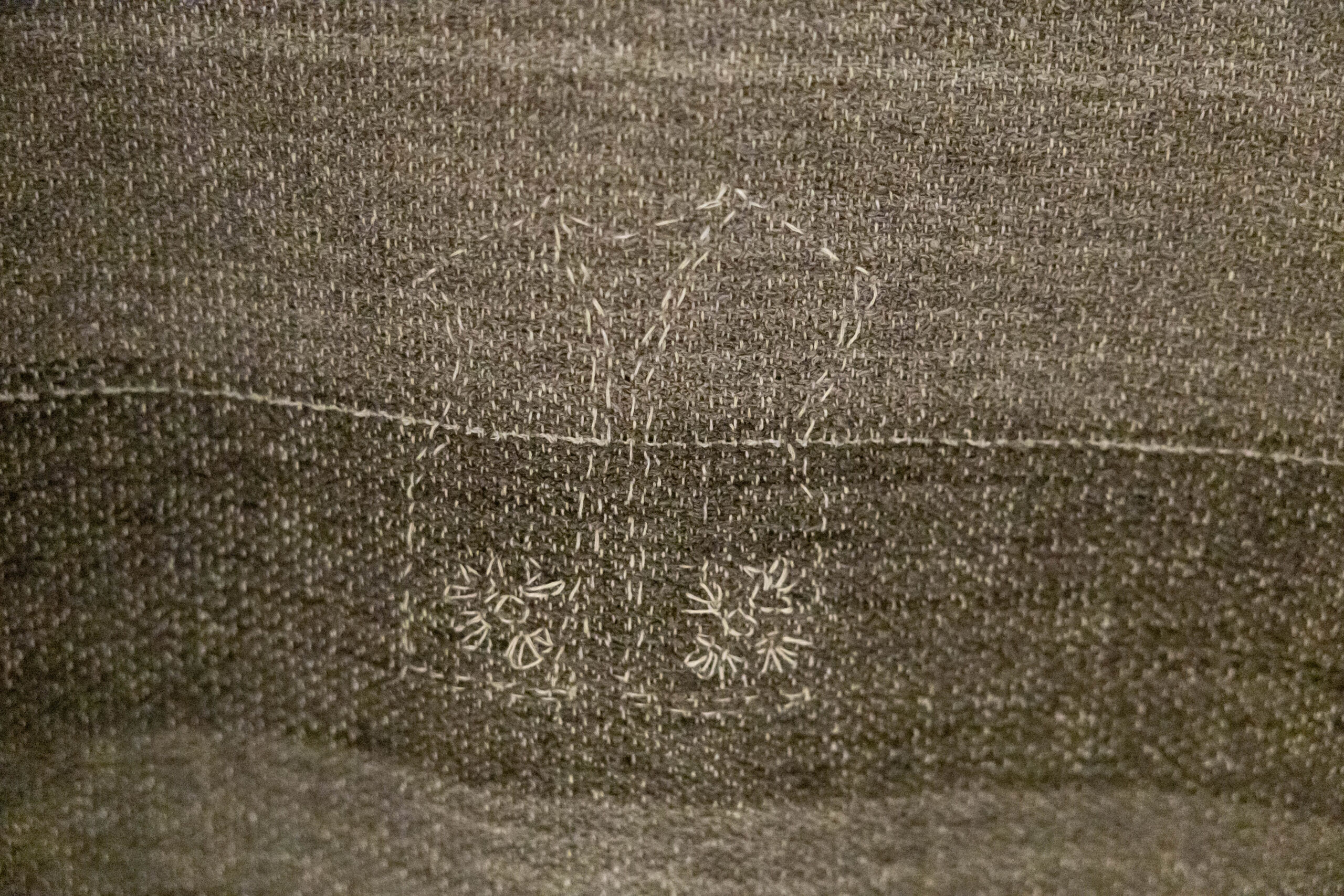
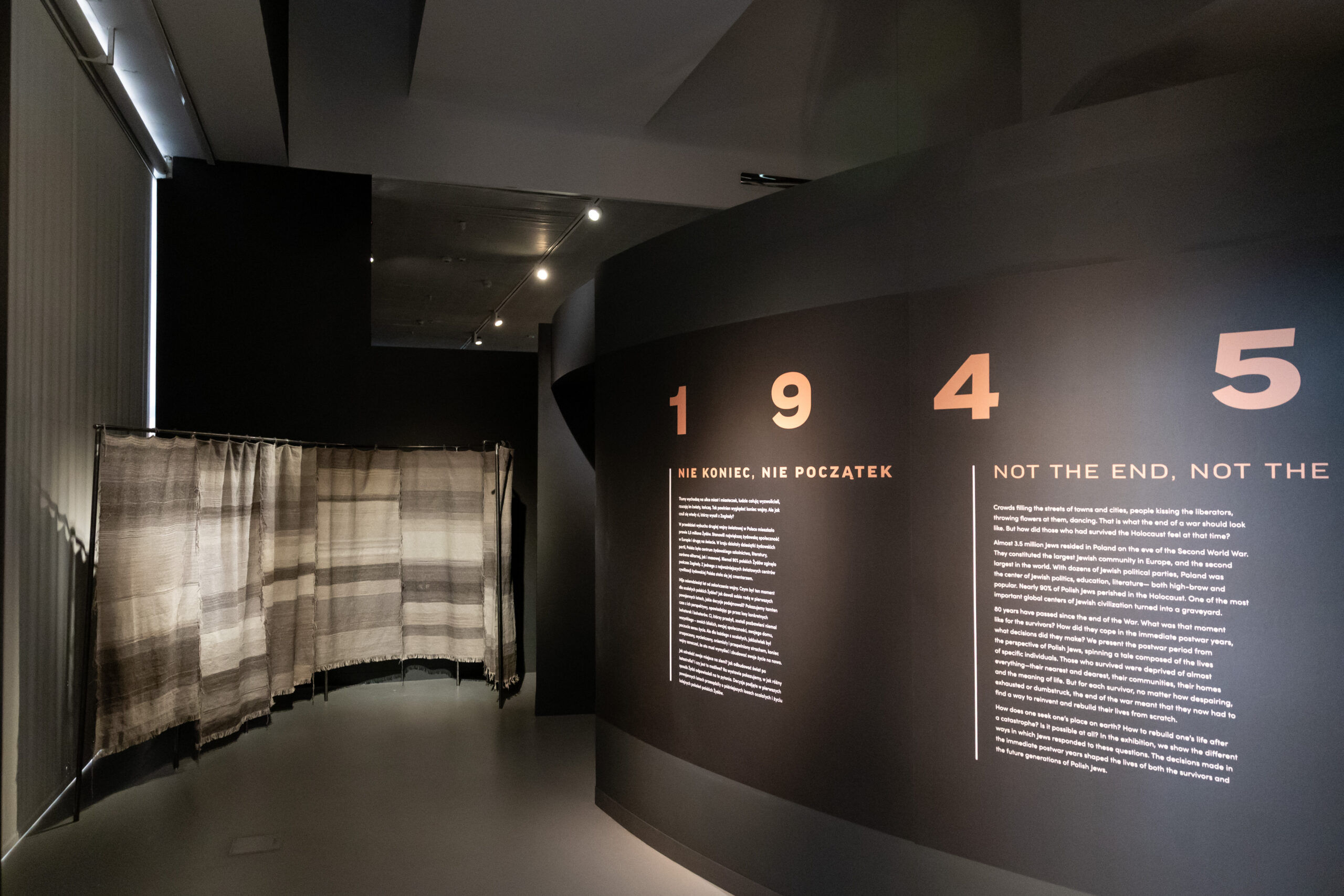
Photo. Maciek Jaźwiecki